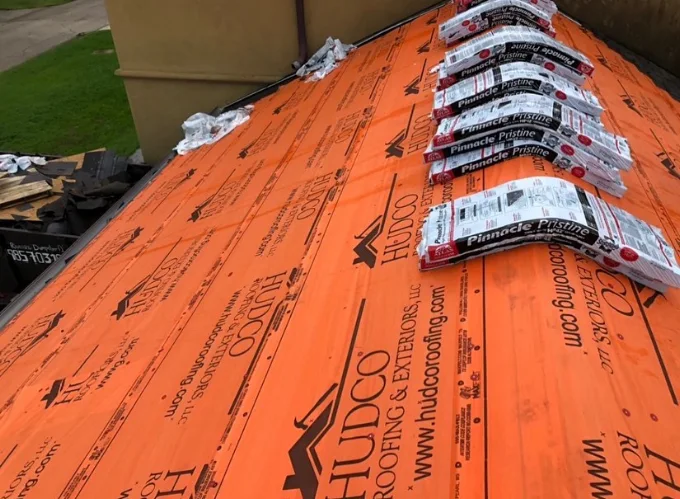
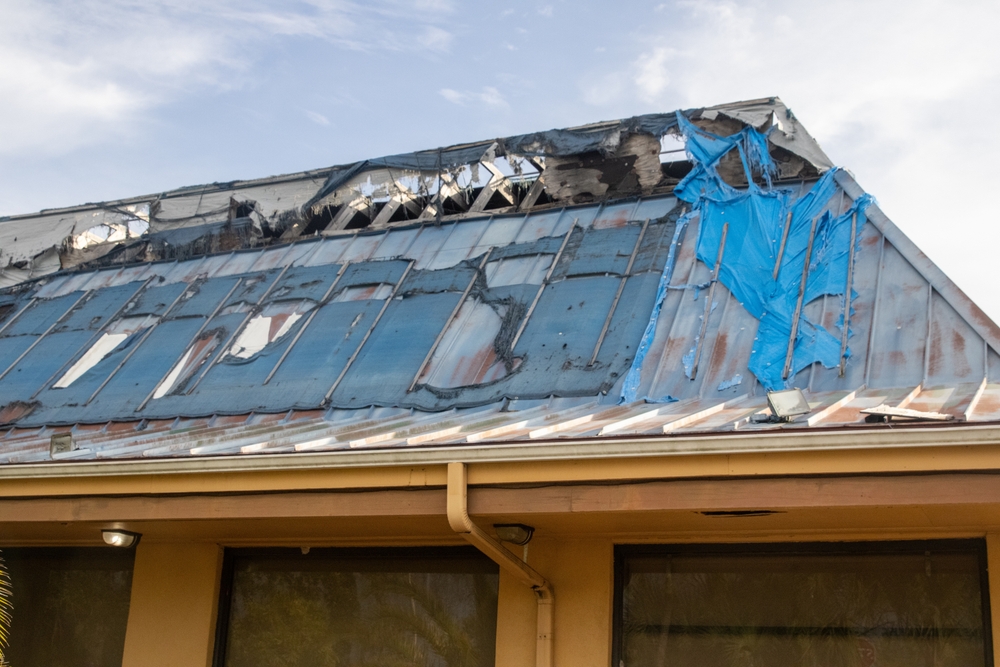
A storm tears across Louisiana overnight, and by morning you’re standing in the driveway squinting up at your roof. Maybe a shingle landed in the flower bed. Maybe there’s a fresh brown ring spreading across the ceiling. Either way, one question hits you fast: who’s going to pay for all this? Here’s the good news — your homeowner’s policy might cover most of the cost, and sometimes a full tear-off and rebuild. Learning how to get insurance to pay for roof replacement doesn’t have to feel like a fistfight with your insurance company. With the right steps and a trusted roofer standing beside you, the whole thing goes a lot smoother than most homeowners expect.
At HUDCO Roofing, we guide Louisiana families through storm claims week after week. So grab a cup of coffee, and let’s break this down in plain language — the way we’d explain it sitting right across from you at the kitchen table.
What Hail and Wind Damage Looks Like Before You File a Roof Insurance Claim
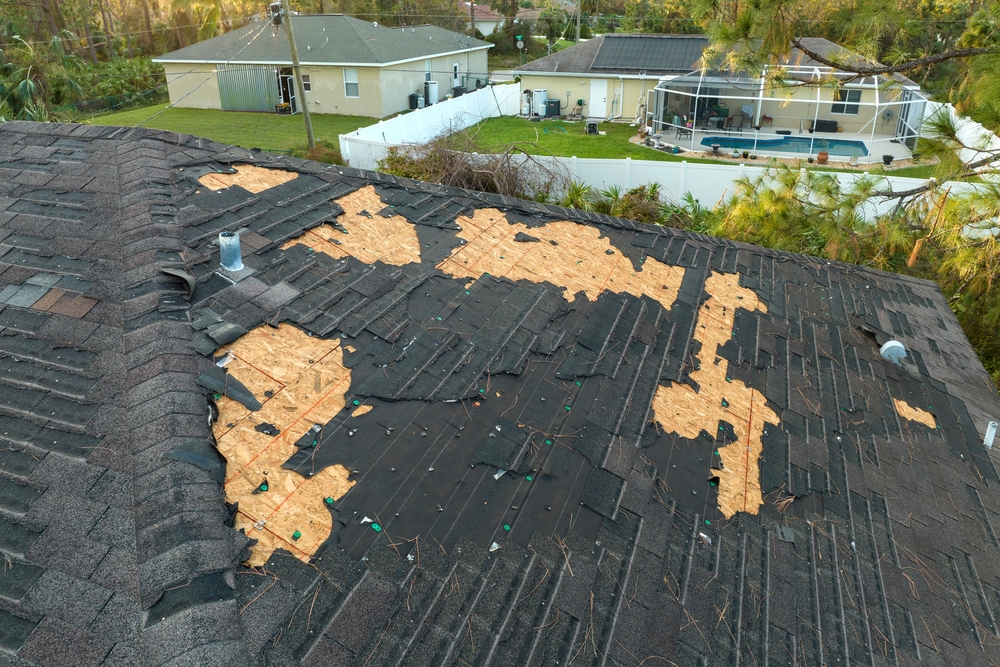
Hail and wind don’t always punch obvious holes in your roof. Sometimes the damage hides in plain sight, and that’s exactly why so many valid claims never get filed. Knowing what to look for gives you a real head start on a strong roof insurance claim. Here are the warning signs we spot on Louisiana roofs after a storm:
Bruised or dented shingles.
Hail knocks the protective granules loose and leaves soft, dark spots behind. Run your hand across the surface and you might feel little dimples, almost like the dents on a golf ball. Over time, those bare patches let water sneak past the shingle and rot the wood underneath.
Missing or curled shingles.
High wind grabs the edges, peels shingles back, or rips them clean off the deck. Even one missing shingle opens a doorway for rain, and once moisture works into the decking, the trouble spreads quick.
Granules are piling up in the gutters.
Those sandy bits collecting in your downspouts came straight off your shingles. A roof shedding that much grit is usually near the end of its life, and a storm just sped the clock up.
Stains, leaks, or a sagging ceiling inside.
When you spot a brown ring on the bedroom ceiling, water has already made its way through every layer above it. Interior damage like this is one of the loudest red flags that your roof needs a real, hands-on inspection.
Dented gutters, vents, and flashing.
Hail strong enough to dent soft metal is plenty strong enough to bruise your shingles too. Adjusters treat these dings as hard proof, so don’t shrug off the marks on your gutters and vent caps.
Now, here’s the part most homeowners miss. You don’t have to play roof detective on your own, and climbing up there yourself is a fast way to get hurt. A quick, safe look from our crew tells you whether you’ve got storm damage worth a claim or just ordinary aging. If a leak already showed up inside, reach out about emergency roof repair right away so a small drip doesn’t turn into a soaked attic.
How to Get a New Roof Through Insurance: Your First Moves After the Storm
The clock matters with storm claims, so quick action pays off. Right after the weather clears, snap photos of everything you can safely reach — the roof from ground level, the yard, fallen branches, scattered debris, and every water spot inside the house. Date-stamped pictures build a record nobody can argue with down the road. After that, write down the date of the storm, since your insurer will want to line the damage up with a specific weather event.
Then give us a ring. We climb up, document the damage safely and thoroughly, and tell you straight whether you’re looking at a real claim or just normal wear and tear. If the damage is fresh and storm-related, that’s when the actual work of how to get insurance to pay for roof replacement gets rolling. Sometimes a roof only needs patching, and a simple roof repair does the trick. Other times the storm did enough harm that a full residential roof replacement is the smart, safe call. Either way, you’ll know your options before you ever pick up the phone with your insurance company.
How to Get Insurance to Pay for Roof Replacement, Step by Step
Plenty of homeowners freeze up at this part, but the path is simpler than it sounds once you see it laid out. Here’s the order things usually go:
Get a roof inspection first
Before you call your insurer, let our crew take a careful look. We document the damage with photos and notes so you walk into the claim knowing what you actually have. This one move keeps you from filing a weak claim or accepting a lowball offer later on.
File your roof insurance claim
Call your insurance company or hop on its app and report the storm damage. Give the date of the storm and a short description of what happened. The company opens a claim and assigns you a claim number — hang onto that number, since you’ll use it at every step.
Wait for the adjuster to schedule
Your insurer sends out a field adjuster to inspect the roof and decide what the policy covers. After a big regional storm, the wait can stretch a bit, so file early to get in line sooner rather than later.
Have us meet the adjuster on-site
This step changes everything. When our roofer climbs up alongside the adjuster, we point out the hail bruises, wind creases, and soft-metal dents that are easy to overlook from the ground. Two trained sets of eyes catch far more than one, and that often means a fairer outcome for you.
Review the scope of work and the payout
Once the adjuster finishes, your insurer sends a scope sheet listing the covered damage and the dollar amount. We go over it with you line by line to confirm nothing got left off. If the numbers fall short of a proper repair, we push back with the documentation to back it up.
Approve the work and get your new roof
After the claim clears, you pay your deductible, we order materials, and our crew gets to work. You end up with a solid roof over your family, and the bulk of the cost rides on your policy instead of your savings account.
Want a deeper look at this whole process? Our insurance claims page walks through it in even more detail, and our team handles the back-and-forth so you don’t have to.
Why HUDCO Makes Your Roof Replacement Insurance Claim Go Smoother
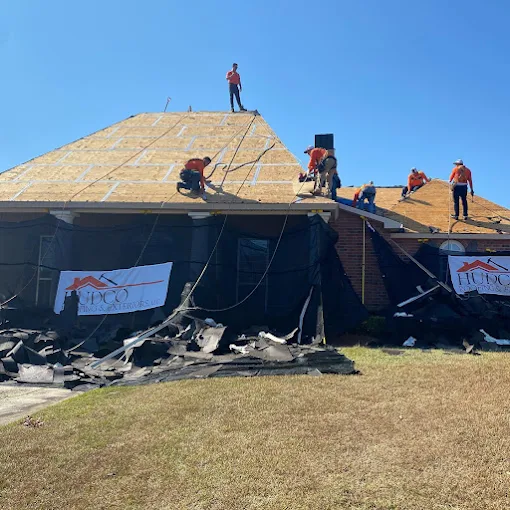
Most homeowners file a roof claim maybe once or twice in a lifetime. We do this every day, so we know the language adjusters use, the proof carriers ask for, and the spots where claims tend to fall apart. That experience tips the scales in your favor.
When we stand on your roof next to the adjuster, we speak the same shorthand and point to the same evidence. We don’t inflate damage or chase claims that aren’t real — that approach helps nobody and can sink a good case. What we do is make sure every bit of legitimate storm damage actually shows up on the scope sheet, so your payout reflects the true cost of the work. On top of that, we handle supplements, paperwork, and follow-up calls, which takes a giant weight off your shoulders during an already stressful stretch.
Worried about the deductible or any gap your policy doesn’t cover? We’ve got you there too. Take a look at our financing options for flexible ways to handle the out-of-pocket portion without draining your rainy-day fund. And if you run a business, our commercial roof repair team handles storm claims for shops, offices, and warehouses with the same care.
What to Do If Your Roof Insurance Claim Gets Denied
A denial stings, but it’s far from the end of the road. Carriers say no for all sorts of reasons — an adjuster missed the damage, the paperwork came in thin, or the company chalked the wear up to age instead of the storm. Don’t toss that denial letter in the trash. A “no” today can flip to a “yes” with the right follow-up. After that, follow the instructions below:
- Read the letter and find the exact reason given.
- Call the roofing company. They will do a fresh inspection, gather sharper photos and measurements, and put together a written rebuttal that answers the carrier’s reasoning point by point.
- Your insurer can send a second adjuster or reopen the file. Many of the strongest roof replacement insurance approvals we’ve seen came after a first denial got challenged the right way.
- Patience and solid documentation win these fights more often than not.
FORTIFIED Roofing and How It Affects Roof Replacement Insurance
Since Louisiana sits right in the path of hurricanes and hailstorms, building tougher the second time around just makes sense. A FORTIFIED roofing system is built to a stronger standard that helps your home stand up to high wind and driving rain. Sealed roof decks, ring-shank nails, and better edge protection all work together to keep the roof on the house when the next big blow comes through.
There’s a money angle too. Many Louisiana insurers offer premium discounts for a FORTIFIED roof, and the state runs a grant program to help cover the cost of upgrading. You can read the details straight from the source on Louisiana’s Fortify Homes Program through the Louisiana Department of Insurance. So when a storm forces a rebuild, that’s the perfect moment to come back stronger and trim your future premiums at the same time.
Where We Help With Roof Replacement Insurance Across Louisiana
We’re proud to serve homeowners all over the state, and you can see the full list on our Areas We Serve page. Storms don’t pick favorites, so wherever you live, there’s a good chance we’ve worked a claim near you.
Up north, our crew handles hail and wind claims for families through our work as a Roofing Company in Shreveport, LA. Out west, hurricane season hits hard, and we step in fast as a Roofing Contractor in Lake Charles, LA when roofs take a beating. Down in Acadiana, homeowners lean on us as their go-to Roofing Company in Lafayette, LA for honest storm assessments.
Closer to the capital, we’ve earned a name as a dependable Roofer in Baton Rouge, LA that shows up when the wind dies down. And in the southeast, our team works as a trusted Roofing Company in New Orleans, LA, helping folks rebuild after the hurricanes roll through.
Contact HUDCO Roofing for Roofing Insurance Claim in Louisiana
Storm damage is stressful enough without fighting your insurance company on your own. Let us carry that load. From the first inspection to the final nail, HUDCO Roofing handles the heavy lifting so you can get back to normal life under a roof that’s built to last. We know how to get insurance to pay for roof replacement, and we’ll stand right beside you through every step of the claim.
Don’t wait for the next storm to make a small problem worse. Call us today at 318-584-0044 or reach out through our Contact Page for a free, no-pressure roof inspection. Your roof protects everything under it — let HUDCO make sure it’s ready for whatever Louisiana weather throws next.
FAQs About How to Get Insurance to Pay for Roof Replacement
Does homeowner’s insurance cover a full roof replacement after hail or wind?
In many cases, yes. If a storm causes sudden damage that a roof can’t be safely repaired, most policies cover a replacement minus your deductible. The key is proving the damage came from the storm and not from old age, and that’s exactly where a documented inspection from our team carries weight.
How long do I have to file a roof insurance claim after a storm?
Most Louisiana policies give you a set window, often a year or two, but waiting is risky. The longer you sit on it, the harder it gets to prove the storm caused the damage. File soon, gather your photos, and get an inspection on the books before the evidence fades.
Will filing a claim make my premium go up?
A single storm claim usually has less effect than people fear, since the damage came from weather and not from neglect. Rates can shift across a whole region after a major storm, but that happens whether you file or not. Skipping a valid claim just to dodge a possible increase often costs you far more in the long run.
Can I pick my own roofer, or does the insurance company choose?
You pick. Your insurer might suggest a contractor, but the choice is yours, and you have every right to hire a local roofer you trust. Bringing HUDCO in early tends to make the claim cleaner and the final roof a whole lot better.
What if the adjuster’s payout doesn’t cover the real cost?
This happens more than it should. When the scope sheet falls short, we file a supplement with extra documentation to recover the missing amount. Roofing prices and code requirements change, so a fair payout should match what the job truly takes today.